Bill of materials
What each finished item is made of, in what quantity, with versions when a formulation changes.
- Multi-level BOM
- Version history
- Yield and wastage allowance
06Manufacturing · ERP
Raw materials, production runs, finished goods and warehouse stock tracked in one system — so you can see what was consumed, what was produced, and what it cost. Built for manufacturers running real production floors in Sri Lanka.
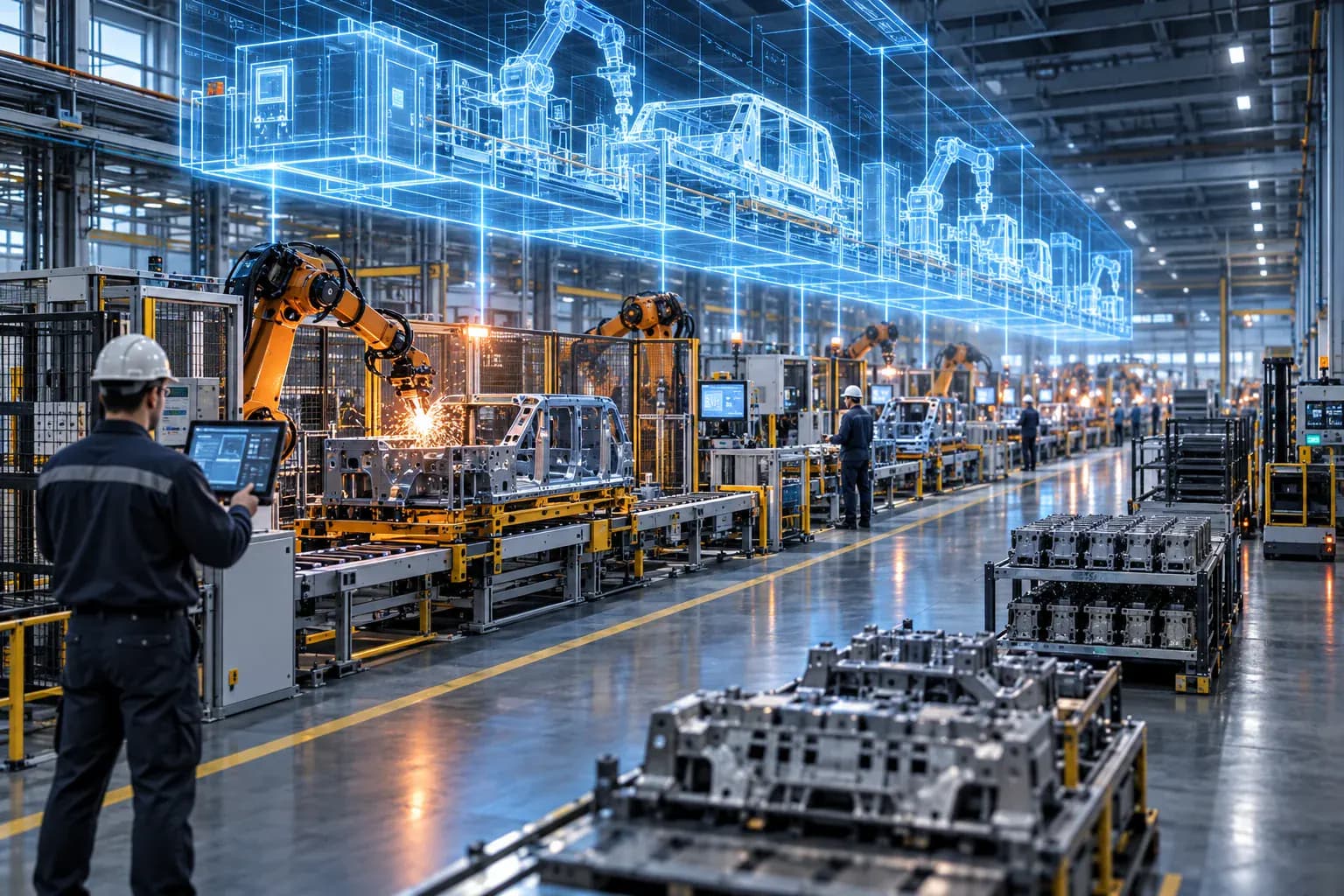
Manufacturing losses rarely arrive as one large event. They accumulate in the gap between what was planned, what was issued and what came back as finished goods.
A manufacturing client told us the change was being able to monitor production, material usage, finished goods and warehouse stock in one place — which is exactly the gap above, closed.
Each step records a stock movement, so cost and quantity stay attached to the batch that produced them.
A production order is raised for a quantity of a finished item, exploding its bill of materials into required raw material.
Required material is checked against stock, and shortfalls are visible before the floor starts rather than mid-run.
Raw material is issued against the production order, moving stock out of stores and onto the run.
Output is recorded against the batch, along with wastage and any rework, so actual usage is captured at source.
Completed output moves into finished-goods stock and becomes available to sell — immediately, not after paperwork.
Actual material consumed against the batch gives a real cost per unit rather than a standard assumption.
Scope depends on how many stages your process has and whether you sub-contract any of them.
What each finished item is made of, in what quantity, with versions when a formulation changes.
Planned runs with required material exploded, tracked from release through to completion.
Issue against a run, return of unused material, and full traceability of what went where.
Output received into stock and available for sale, with batch identity retained.
Recorded at the point it happens, so it becomes a number instead of a rumour.
Storage locations, transfers and dispatch to customers or to a distribution arm.
Every figure traces back to a recorded movement, so it can be defended line by line.
The sequence is the same across industries — what changes is the detail captured in the first step.
We start with a free requirement study on your site, produce a written scope with a fixed quotation, then build in phases with a demo at the end of each one. Masters and opening balances are migrated and reconciled before go-live, staff are trained on their own data, and support continues after handover. The full implementation process is set out on the main ERP page.
Yes. Each finished item carries its bill of materials, which is exploded into required raw material when a production order is raised. Multi-level BOMs and version history are supported where the process needs them.
Yes — wastage and rework are recorded against the run at the point they happen, which is what makes wastage reporting meaningful rather than an end-of-month estimate.
Yes. Because material is issued against the production order, cost per unit is calculated from what was actually consumed rather than from a standard rate.
Yes, and several of our clients run both. Finished goods flow from production into the warehouse and out through the distribution process without a second data-entry step — see our distribution ERP page for that side.
Describe your production process — stages, materials, wastage points — and we will map it to a production module and quote the implementation in writing.