Table management
Floor layout, table status and covers, so seating and clearing are visible rather than remembered.
- Live table status
- Merge and split tables
- Waiter assignment
05Restaurant · ERP
Dine-in, takeaway and delivery-platform orders handled from a single order screen, with Uber Eats and PickMe integrated, kitchen flow tracked, and stock and daily sales reported from the same data. Built and running for restaurant clients in Sri Lanka.
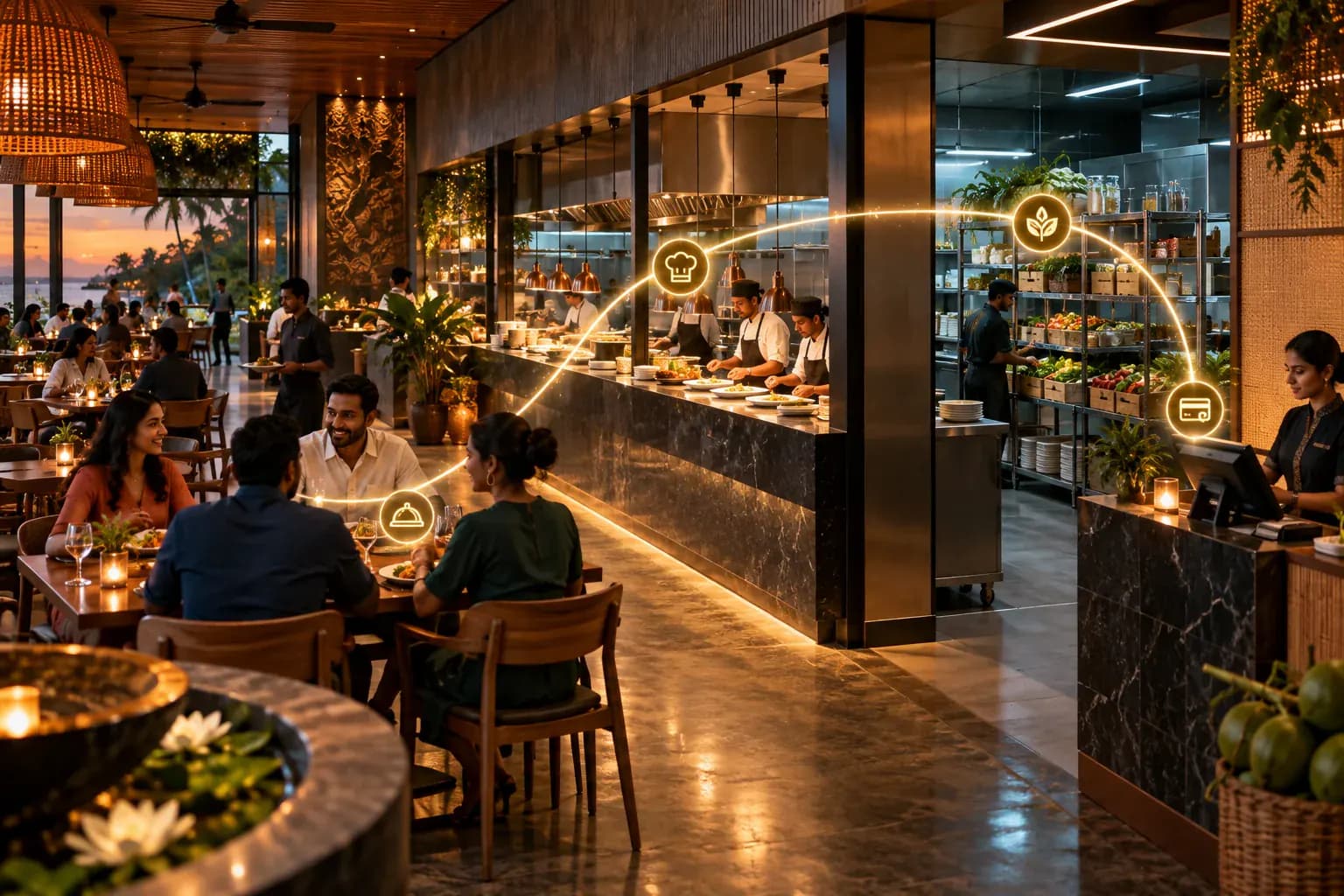
A restaurant taking delivery orders usually ends up with a counter full of separate devices — one per platform — and a staff member whose job is copying orders between them.
Our restaurant clients describe the fix in one line: all orders managed from one place, and table management, order handling and daily operations became much easier.
Dine-in, takeaway and delivery orders enter the same queue and are handled with the same steps.
From a table, the counter, or an integrated delivery platform — Uber Eats and PickMe orders land in the same screen as the rest.
Order confirmed against current item availability, then sent to the kitchen with its channel and timing visible.
Kitchen sees what to prepare and in what order, with status updated as items are completed.
Dine-in orders go to the table; delivery orders are packed and handed to the rider with the platform reference attached.
Table bills split or merged as needed; platform orders reconcile against the platform’s own settlement.
One day-end covering every channel, with sales, payment types and item consumption in a single report.
Scope depends on whether you run dine-in, delivery, or both — and on how many outlets share a menu.
Floor layout, table status and covers, so seating and clearing are visible rather than remembered.
One queue for dine-in, takeaway and delivery orders with channel and elapsed time on every ticket.
Uber Eats and PickMe orders pulled into the same screen, removing the re-typing between platform tablets and billing.
Menu structure, modifiers and availability managed centrally and reflected everywhere the menu is served.
What to cook, in what order, and what is already done — visible to the kitchen rather than shouted across the pass.
Ingredient and item stock reduced by what was sold, so purchasing is based on consumption.
Verified against the platform’s live API during implementation — not assumed.
Consolidated across dine-in, takeaway and every delivery platform.
The sequence is the same across industries — what changes is the detail captured in the first step.
We start with a free requirement study on your site, produce a written scope with a fixed quotation, then build in phases with a demo at the end of each one. Masters and opening balances are migrated and reconciled before go-live, staff are trained on their own data, and support continues after handover. The full implementation process is set out on the main ERP page.
Yes. We have built this integration for restaurant clients — platform orders arrive in the same order screen as dine-in and takeaway, so staff are not copying between tablets. Integration scope is confirmed against the platform’s current API during the requirement study.
Yes, and that is the usual case. Dine-in, takeaway and delivery orders share one queue and one day-end, with the channel tagged on every order for reporting and reconciliation.
Yes. Menus, modifiers and availability can be managed centrally and applied per outlet, with sales reported by outlet and for the group.
Stock and consumption tracking is part of the scope where you need it — item sales reduce stock so purchasing follows actual consumption, and wastage is recorded rather than inferred.
Tell us which platforms you take orders from and how your floor runs. We will show you the order flow end to end and quote the implementation in writing.